


Which Level of Executive Support Is Right for You?
Find the right executive support structure for your business in just two minutes.
Start the Free AssessmentYour quarterly offsite just ended. Three days of meetings, whiteboards full of ideas, everyone pumped about the plan.
Two weeks later? Half the action items are stalled because no one is driving them forward.
Strategic planning isn’t the hard part. Making it happen is.
If you’re trying to turn those strategy sessions into real results, you need someone handling the operational stuff.
That’s where an executive assistant (EA) comes in. They manage everything around the strategy so you can actually focus on the strategy itself.
TL;DR – How Can an EA Support Strategic Planning Cycles and Offsites?
EAs manage the entire operational backbone of your strategic planning, turning good conversations into tracked outcomes.
Here’s what they do:
- Before: Handle venue logistics, compile pre-reads, schedule prep calls, and make sure everyone shows up prepared.
- During: Capture decisions in real time, track action items, and manage all ground-level details.
- After: Convert notes into trackable deliverables, schedule follow-ups, and keep everyone accountable.
Looking for this level of support? ProAssisting matches you with US-based EAs who’ve worked at companies like Target, Fidelity, and JPMorgan Chase. Each EA supports only three clients max, so they actually learn your business.
Month-to-month contracts mean you can scale support up during the planning season. Start working with a pro-level EA today.

Why Strategic Planning Fails Without Operational Support
Most strategy sessions die in the execution gap.
You spend three days thinking through your biggest opportunities. Everyone leaves aligned and energized.
Then you all go back to your actual jobs – the 200 unread emails, the back-to-back meetings, the daily fires.
The off-site notes? They’re sitting in someone’s notebook. Action items live in different people’s heads. Six months later, you’re having the same conversations because nothing stuck.
Harvard Business Review found that 67% of well-formulated strategies fail because of poor execution. Not bad thinking. Bad follow-through.
Here’s the thing – you don’t need better strategy frameworks. You need someone who owns the operational layer.
Someone who:
- Turns decisions into tracked actions
- Maintains momentum when everyone scatters
- Connects what you decided to what actually happens
That person can’t be you. You’re running the business. It needs to be someone whose job is making your strategy executable.
What Goes into Planning a Productive Executive Offsite?
A good offsite starts six to eight weeks before anyone walks into the room.
- Pre-work makes or breaks the session. If your team shows up without reviewing materials or thinking through the topics, you’re wasting half the offsite getting everyone up to speed. Someone needs to compile the background documents, send them with sufficient lead time, and follow up to ensure people actually read them.
- Logistics affect outcomes more than you think. Poor Wi-Fi, uncomfortable seating, or poorly timed meals divert attention from strategic thinking. According to Bizplanr, 42% of event organizers report that logistics problems affect outcomes. When your team is distracted by operational issues, they’re not doing their best work.
- The agenda needs structure. Not just topics, but time blocks, discussion owners, and built-in breaks. Most offsites try cramming too much in and end up with surface conversations about everything instead of deep dives into what matters.
- Documentation setup happens before the offsite. How are you capturing decisions? Who’s taking notes? What format for action items? Figure this out in advance, or you’ll have scattered notes across five laptops.
- Post-offsite execution should be designed upfront. What’s the follow-up cadence? How do you track action items? When’s the next check-in? Don’t leave these questions for later.
All of this requires time and follow-through from someone who isn’t caught up in the strategic conversation. That’s the core problem. You don’t have the bandwidth to manage the operational layer of your own planning.
One executive planner noted in a leadership forum discussing offsite strategy, these leaders “don’t fare well with requests to complete too much pre-work in advance, yet have high expectations for an impactful session.”
u/runforyourself pointed out in the same discussion, “If you want to set some plans/directions/actions, ensure the agenda is properly set, nominate people to take ownership and set follow-ups, otherwise it will be pure BS, and nothing will change.”
That ownership piece is critical – someone needs to be designated to track each action item coming out of the session.
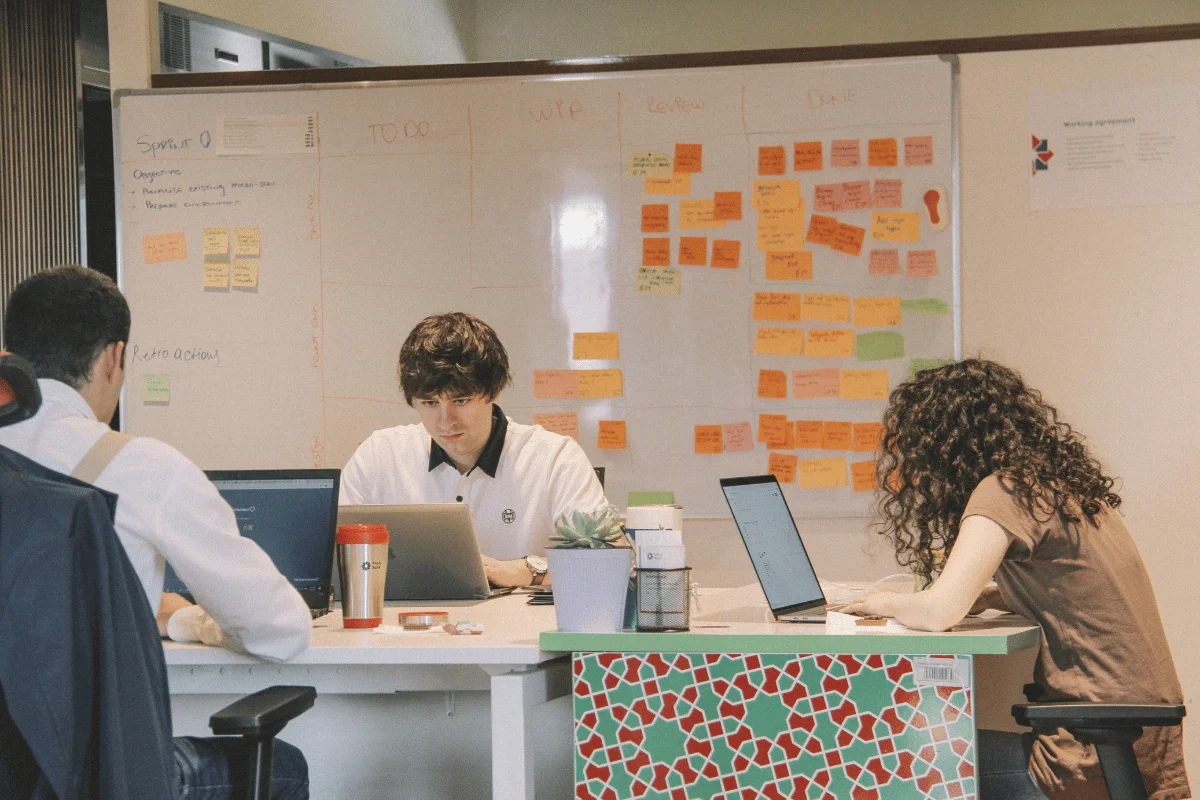
How EAs Support Strategic Planning Cycles and Offsites
Your executive assistant handles the complete lifecycle, turning chaos into a systematic process.
Before the Offsite
Your EA handles pre-work from start to finish:
- Collecting Materials: They grab the background docs from each department and turn them into pre-reads people will actually use.
- Distribution and Follow-Up: They send everything out with clear instructions, then follow up so people actually read it before showing up.
- Venue Coordination: They research venues, negotiate pricing, and handle the dietary restrictions. You don’t talk to a single vendor unless you want to.
- Pre-Alignment Calls: Need your team aligned before the big day? Your EA gets everyone on the same calendar, builds the agenda, and takes notes.
Working with an outside facilitator? Your EA fills them in on how your team works, what you’re trying to accomplish, and what actually matters.
The facilitator arrives prepared instead of improvising.
During the Offsite
Your EA captures everything while staying invisible:
- Real-Time Documentation: While you’re discussing strategy, they’re organizing notes and tracking what needs follow-up. They write down why you made decisions, not just what got decided.
- Operational Details: Materials need printing? Room needs rearranging? Lunch is late? Tech stops working? Your EA fixes it. You stay focused on the conversation.
- Breakout Logistics: When you split into smaller groups, your EA makes sure everyone has what they need. The outputs from each group get captured.
This isn’t transcribing everything. It’s distilling conversations into usable outputs so you can focus on thinking instead of note-taking.
After the Offsite
Post-offsite follow-through is where your EA creates the most value:
- Structured Action Plans: They convert raw notes into clear plans with owners, deadlines, and dependencies.
- Fast Distribution: Within 24 to 48 hours, your team gets a summary with decisions made, actions assigned, and next steps defined.
- Ongoing Accountability: Regular check-ins to review progress, reminder nudges to owners, and escalation for items falling behind.
- Cycle Connection: As the next planning cycle approaches, they review progress from the previous session and help you see how the strategy has evolved.
This follow-through is what separates off-sites that change things from off-sites that produce documents nobody touches again.
Essential EA Tools for Strategic Planning Support
The right executive assistant tools make this process systematic rather than manual.
- Project Management: Asana, Monday, or ClickUp track all moving pieces – pre-work assignments, logistics tasks, vendor coordination, and post-offsite actions. Everything has clear owners and due dates.
- Documentation Hubs: Notion, Confluence, or Google Workspace centralize pre-reads, offsite notes, and decision records. No more hunting through email for what was decided.
- Real-Time Collaboration: Miro or Mural capture visual thinking during the offsite. Your EA sets these up in advance and preserves outputs for later reference.
- Scheduling Tools: Calendly or Doodle eliminates the email tennis when coordinating multiple executives’ calendars for prep calls.
- Communication Channels: Dedicated Slack channels for offsite planning and follow-up keep updates organized without cluttering inboxes.
- Travel Management: TravelPerk or Expensify handles bookings and expenses in one place, making logistics and reconciliation straightforward.
The specific tools matter less than having a consistent system. High-performing EAs don’t reinvent their workflow every offsite.
They know exactly how information flows, where things get documented, and how follow-through happens.
AI tools are also becoming part of the EA toolkit for strategic planning. In a recent discussion about AI tools EAs use daily, professionals shared how they’re applying these technologies to offsite planning:
- For meeting documentation, u/AudreyLocke shared: “Meeting minutes (recording and transcription have been approved by legal counsel). Huge time suck without using Copilot. I think a potential benefit is that they remove my bias from the record.“
- u/starsinwaters mentioned their boss’s approach: “I know my boss uses Notion’s AI to transcribe and summarize client calls too.“
- u/NoMove1288 uses Claude for several planning-related tasks: “Survey data and feedback analysis, generating action suggestions, generating reports using templates, drafting all staff messages for my exec, creating executive summaries of various things.“
- Meeting transcription tools are popular. u/Pamela_EA mentioned: “I use ChatGPT here and there for polishing messages, and Fireflies/Otter for meeting notes.” u/SpiritualGangster74 added: “Otter.ai to summarize meeting minutes.” These tools handle the documentation burden during long strategy sessions.
- For document processing, u/Maximum_Pollution371 shared a specific use case: “Mostly PDF to plain text conversion, which is a huge time saver… It’s way easier to use our AI PDF converter and just tell it, ‘Convert order summary into individual, simple text line items to copy to another document.‘”
- For task management, u/Original_Avocado2777 emphasized the importance of reliable systems: “Motion (not to be confused with NOTION!) is the only tool that helps me not drop anything on my to-do list. I would be lost without it!”
EAs use AI for repetitive documentation, analysis, and formatting tasks.
This frees up time for the strategic coordination that requires human judgment, relationship management, and real-time problem solving during the offsite itself.
Work with Pro-Level EAs Built for Strategic Support
Strategic planning support needs more than just task management. It needs someone who can work across five different areas to make your offsite actually work.
In their book The 29-Hour Work Day, ProAssisting founders Ethan and Stephanie Bull identify what they call the five performance multipliers. These are the five ways a high-level EA creates real value.
For strategic planning, here’s how each one shows up:
- Business Partner: Your EA understands your business. They pick the right vendors. They talk to stakeholders on your behalf. They spot problems early and fix them before you see them.
- Chief of Staff: Your EA becomes the single point of contact. The venue staff calls them. Team members email them. Vendors go through them. You stop fielding questions about room setup and catering. Everything flows through one person.
- Project Manager: Your EA owns the entire off-site project from start to finish. They track deadlines, manage vendors, and make sure nothing gets dropped. The pre-work gets sent. The follow-up happens. All the moving pieces stay organized.
- Assistant/Scheduler: Your EA clears space on your calendar before the offsite so you can actually prepare. After the offsite, they streamline the meetings that turn decisions into real work. You focus on strategy while they handle the scheduling chaos.
- Personal Assistant: If the offsite needs travel, your EA books everything. Flights, hotels, ground transportation. They handle the materials that need printing or shipping. The personal logistics that eat your focus time get handled.
ProAssisting EAs work across all five roles. That’s why they can manage something as complex as strategic planning without constant direction.
Not sure which of these five you actually need? ProAssisting built a quick quiz that shows you where your support gaps are. Takes five minutes. You’ll see which performance multipliers would help you most and how many hours per week you’d get back.
Strategic planning needs all five performance multipliers working together. That’s exactly what ProAssisting EAs are built for.
Get matched with a ProAssistant who can handle your next planning cycle.

Frequently Asked Questions (FAQs)
Below are a few frequently asked questions surrounding this topic:
Do EAs Typically Attend Strategic Planning Offsites?
It depends on your needs and the session’s sensitivity. Many EAs attend to handle real-time documentation and manage logistics during the session. They’re present but not participating in strategic discussions.
For executive-only topics, your EA manages everything before and after but doesn’t attend the session itself.
How Far in Advance Should an EA Start Planning an Offsite?
Start six to eight weeks out for most off-sites. Need an external venue? Flying people in? Hiring a facilitator? Add more time.
Complex logistics need more runway. You can pull off last-minute planning sometimes, but you’ll end up with your second-choice venue, higher costs, and people showing up unprepared.
Can Remote EAs Support In-Person Strategy Sessions?
Absolutely. Remote EAs handle all pre-work coordination, vendor management, and post-offsite follow-through digitally.
During in-person sessions, they manage support via video link, coordinate with on-site staff, and handle emerging needs remotely. The only limitation is that they can’t physically hand you a printed document, which rarely matters.
How Much Strategy Context Should EAs Be Given?
Enough to be effective, not so much that you’re spending hours briefing them on every nuance.
Share the high-level objectives, key priorities, and any sensitive context affecting logistics or follow-up.
Your EA needs to understand your business well enough to make good decisions about what’s important, but they don’t need to sit in every strategic discussion.
Conclusion
Strategic planning only works when someone owns the execution. Without that, your offsite becomes another expensive meeting that produces nothing.
The coordination, follow-through, and accountability that make strategy stick – that’s where most companies fail.
ProAssisting gives you executive-level support for 50-80% less than hiring full-time. The company pays EAs over 75% of what you pay them, which attracts serious talent who stay long-term.
You get college-educated professionals with five-plus years supporting executives. No benefits costs, no equipment, no payroll taxes. Just skilled support that scales with your needs.
Get matched with your EA and turn your next offsite into actual results.